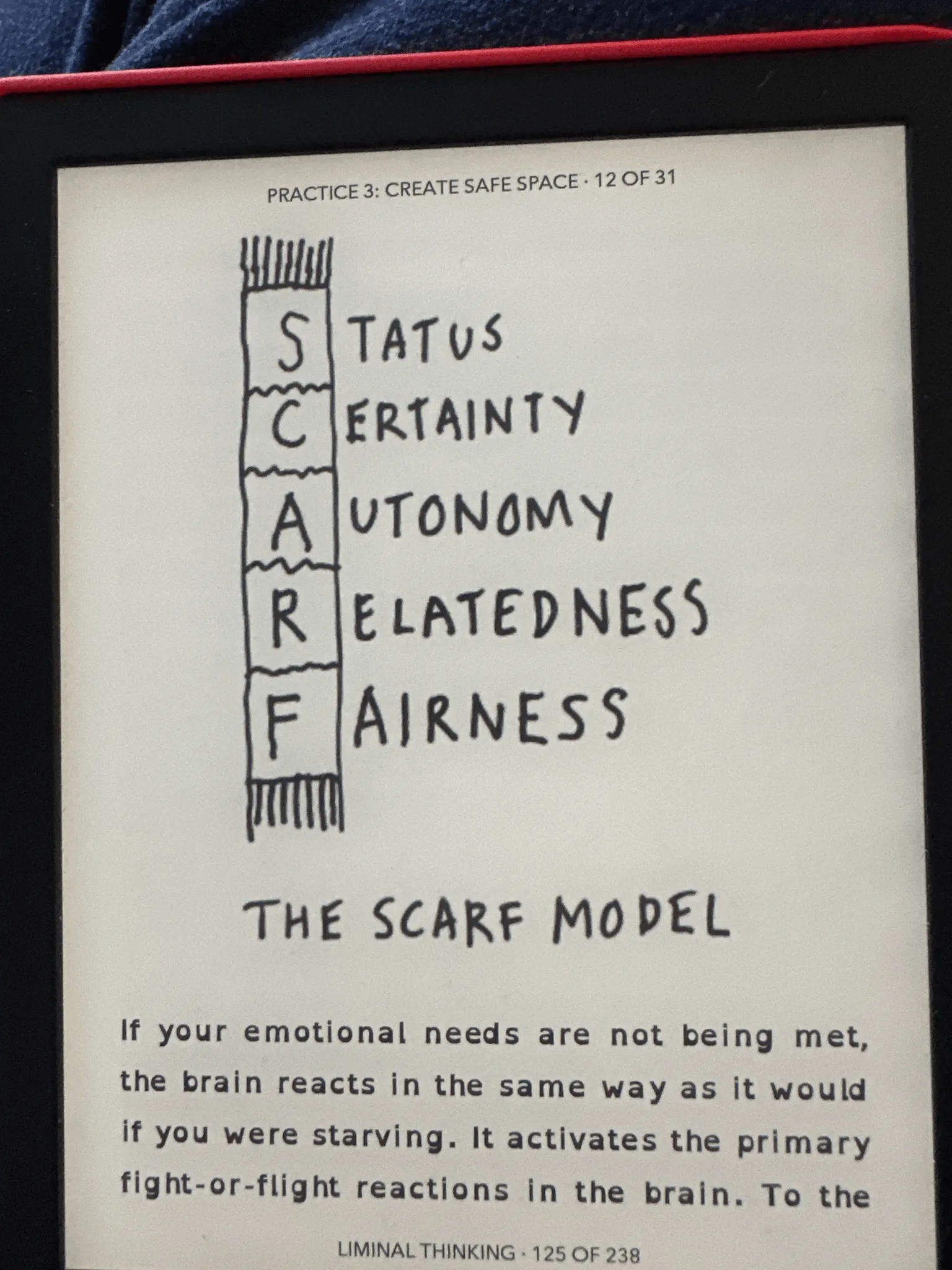
SCARF Model
I came across this model in my reading of Liminal Thinking. While it isn’t a perfect model, I definitely think it goes a long way to thinking about another when in an interaction.
-
Status: This refers to an individual’s sense of relative importance compared to others.
- Application: Acknowledge someone’s expertise or role to help them feel valued.
- Violation: Ignoring or belittling someone’s contributions may cause them to feel unimportant, reducing their confidence and psychological safety.
-
Certainty: People desire predictability in their environment to reduce stress.
- Application: Provide clear communication and expectations in interactions to foster a sense of stability.
- Violation: Ambiguity or inconsistent communication can lead to anxiety, making the person feel insecure and less likely to take risks.
-
Autonomy: This reflects the need for control over one’s choices and environment.
- Application: Offer choices or allow the other person to have a say in decisions that affect them.
- Violation: Micromanaging or limiting decision-making power can lead to feelings of helplessness, undermining trust and psychological safety.
-
Relatedness: It’s the sense of belonging and connection with others.
- Application: Show empathy, foster inclusion, and build rapport to strengthen trust and cooperation.
- Violation: Excluding or isolating someone socially can cause feelings of rejection, reducing their comfort in sharing ideas or concerns.
-
Fairness: People need to perceive interactions and decisions as just and unbiased.
- Application: Be transparent and treat others equally, ensuring fair processes and decisions.
- Violation: Favoritism or unequal treatment can lead to resentment and mistrust, damaging psychological safety and group cohesion.
Violating any of these domains can trigger a “threat” response in the brain, undermining psychological safety and discouraging open, collaborative interactions.
1 min readCreated Edited