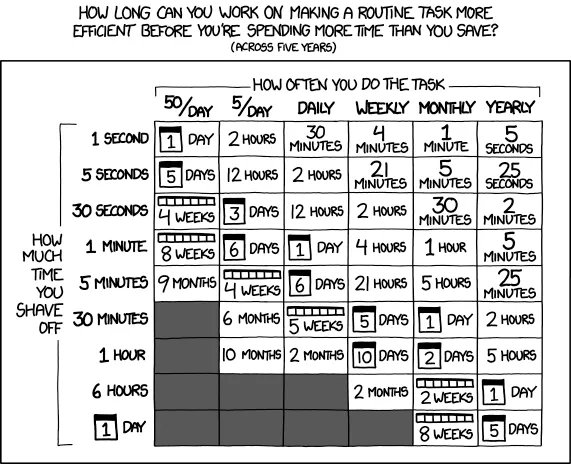
How long can you work on making a routine task before your spending more time than you save?
I love a good automation as much as the next person. However, it is valuable to think about the input as well as the output to determine the value the automation might hold. It is also useful to consider joy and creativity when automating, but if it doesn’t make you happy, scratch a creative itch, or save time, don’t do it!
2024-08-16: I recently found a new lens to view this table through. In Clear Thinking, Shane Parrish discusses “defaults”. Stopping to think, pivot and implement an improvement falls outside the social and inertial defaults. However, it can save time, money, and aggravation in the long term. In order to change the default, it is helpful to be in an environment which allows for better thinking and decision-making. I keep this table hanging in my workspace to help keep me honest about what improvement projects are worth reimagining.
1 min readCreated Edited